
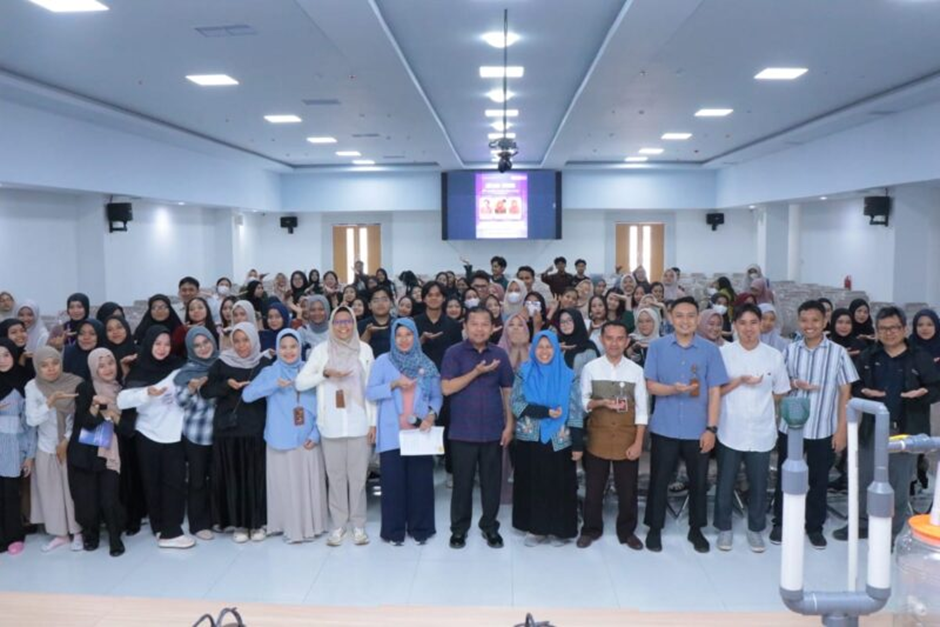
Makassar – The Faculty of Public Health (FKM) at Universitas Hasanuddin (Unhas) once again demonstrated its leadership in environmental health and sustainability. As part of its 43rd Anniversary series, FKM Unhas successfully organized an inspiring public lecture titled “Sky Water: An Overlooked Resource.” The event was held on Monday, 13 November 2025, at the Prof. Dr. H. Sirajuddin Beku Auditorium, 2nd Floor, FKM Unhas, and attracted lecturers, students, and practitioners passionate about water resource management.
This program reflects FKM Unhas’ proactive approach to addressing the increasing challenges of clean water availability, especially amid the pressures of global climate change. As an institution committed to public health, FKM Unhas aims to offer innovative, community-based solutions.
Institutional Support for Innovation and Resource Independence
The public lecture was officially opened by the Dean of FKM Unhas, Prof. Sukri Palutturi, SKM., M.Kes., MSc.PH., Ph.D. In his remarks, he emphasized that innovation and self-reliance in the sustainable use of natural resources are essential to facing future resource crises.
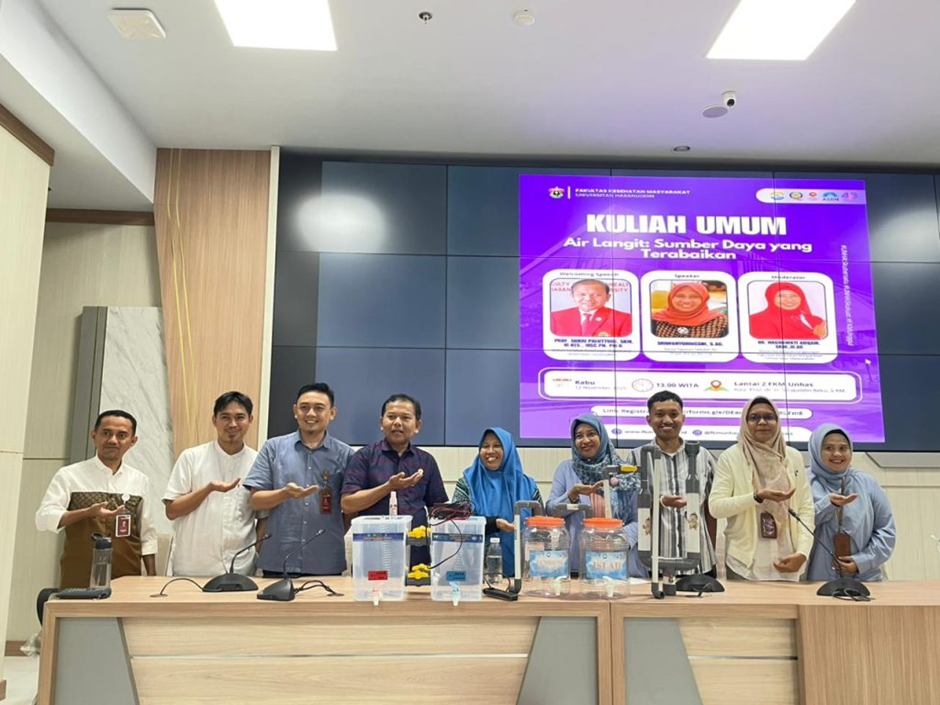
“Rainwater is a tremendous asset that remains underutilized in Indonesia. With the right technology and awareness, rainwater can serve as an effective solution for clean water shortages, especially in regions affected by seasonal droughts or limited access to piped water,” Prof. Sukri stated.
He also expressed appreciation for the Banyu Bening Rainwater School Foundation for their dedication to educating communities, highlighting the importance of collaboration between academia and environmental organizations.
Rainwater as a Source of Life: Introducing the 5M Sustainable Concept
The main speaker, Sriwahyuningsih, S.Ag., Chair of the Banyu Bening Rainwater School Foundation, delivered a compelling presentation titled “Rainwater: A Source of Life and Community Resilience to Climate Change.”
She introduced the 5M Concept, a holistic and sustainable approach to household- and community-level rainwater management:
- Collecting: Using containers such as tanks or barrels to capture rainwater.
- Processing: Applying simple treatment technologies to purify and disinfect rainwater.
- Drinking: Ensuring processed rainwater meets safe drinking water standards.
- Saving: Recharging groundwater through infiltration wells, biopores, or recharge pits.
- Independence: Achieving self-sufficiency in water supply, reducing reliance on deep groundwater or public utilities.
This concept reframes rainwater—often regarded as waste or a cause of flooding—into a valuable resource that strengthens community resilience, health, and socio-economic wellbeing.
Simple Innovations and Ensuring Water Quality
Sriwahyuningsih explained practical and eco-friendly technologies suitable for households, including:
- Rainwater Storage Installations (ISLAH): Integrated systems with filtration units.
- Infiltration Wells and Biopores: Techniques to reduce surface runoff and enhance groundwater recharge.
She emphasized that rainwater, when treated properly using layered filtration, UV exposure, or electrolysis, can meet safe microbiological and chemical drinking water standards. This evidence counters public skepticism and reinforces rainwater’s viability as a clean water source.
The Rainwater School’s core mission, she noted, is “to build resilient, independent communities through the sustainable management of rainwater as a healthy and reliable water source.”
Interactive Discussion: Opportunities for Campus and Community Application
The session was moderated by Dr. Hasnawati Amoqam, SKM., M.Sc., from the Department of Environmental Health. Participants engaged actively in discussions on the feasibility of implementing the 5M Concept on campus and in surrounding communities.
They highlighted Unhas’ strong potential to become a pilot project for rainwater harvesting systems—both for non-potable uses (watering plants, flushing toilets) and potable uses. Such a model could reduce operational costs, support water conservation, and inspire other universities.
The discussion concluded that success depends on combining simple, accessible technologies with community empowerment to encourage behavioral change.
FKM Unhas’ Contribution to SDGs: Clean Water and Sanitation
The public lecture contributes significantly to Sustainable Development Goal (SDG) 6:
- SDG 6.1 – Safe Drinking Water Access: Promoting rainwater as safe drinking water advances equitable access to affordable, safe water.
- SDG 6.3 – Improved Water Quality: Research and education on rainwater treatment help reduce pollution from unmanaged runoff.
- SDG 6.4 – Water Use Efficiency: The 5M concept supports efficient water use and reduces stress on freshwater resources, vital for climate adaptation.
By integrating public health with environmental sustainability, FKM Unhas reinforces its commitment to building communities that are both physically and ecologically resilient.
Closing Reflection: Rainwater as a Blessing
Sriwahyuningsih concluded with a powerful message:
“Rainwater is not just water falling from the sky; it is a blessing that can save our planet when managed with knowledge and awareness.”
This event successfully elevated public awareness that modern public health innovations must also address environmental sustainability. Through this lecture, FKM Unhas has paved the way for more daring research and policy implementation toward national water independence and sustainable global health.