
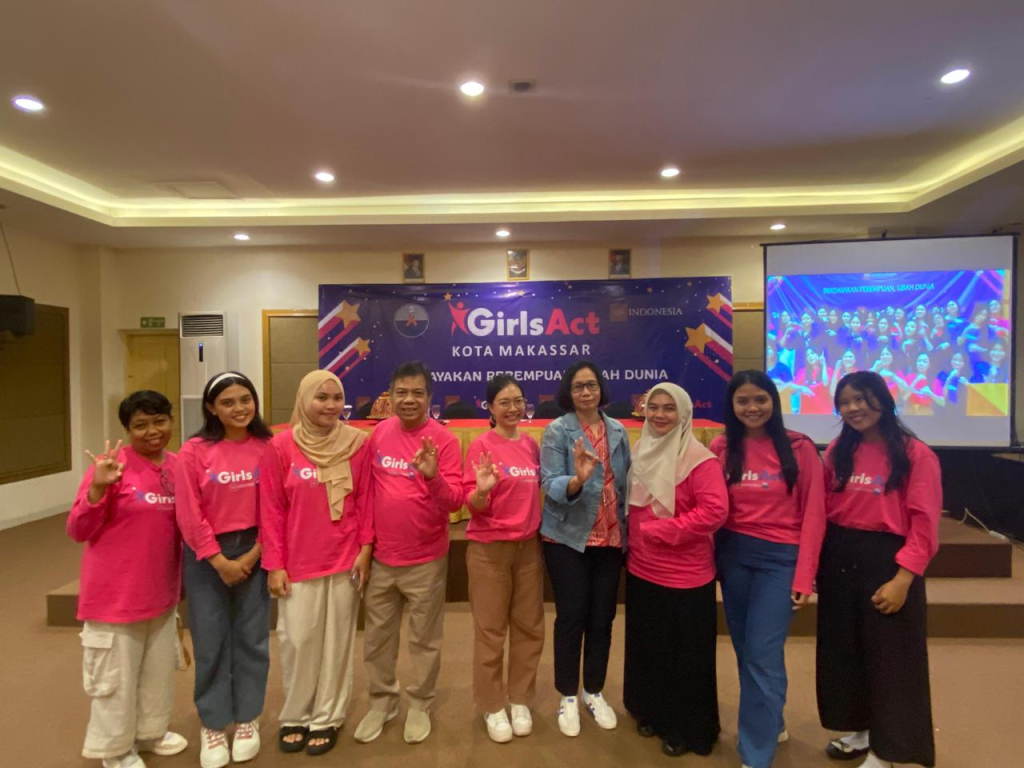
Makassar — The Girls Act Program: Empowering Women to Change the World was officially launched in Makassar on February 14, 2026. The program focuses on empowering young women through four main priorities: prevention of HIV and sexually transmitted infections (STIs), prevention of unintended pregnancies, scholarship support for children from underprivileged families, and providing assistance to young women living with HIV to access proper treatment.
Girls Act is a collaboration between Yayasan Gaya Celebes, AHF Indonesia, and the Kementerian Sosial in response to the various challenges still faced by women and children in Indonesia.
Based on data from the Dinas Pemberdayaan Perempuan dan Perlindungan Anak, gender-based violence in Makassar has increased significantly. A total of 1,222 cases of violence against women and children were recorded throughout 2025, marking a 14% increase compared to the previous year. Sexual violence dominated the reports, followed by domestic violence and a rise in online gender-based violence (OGBV).
This initiative is also supported through collaboration between the Faculty of Public Health (FKM) at Universitas Hasanuddin and Yayasan Gaya Celebes (YGC). The involvement of FKM Unhas strengthens the program’s implementation. Several FKM Unhas students, particularly from the Department of Health Promotion, have joined the Girls Act initiative in Makassar. Student participation is expected to enhance community-based educational approaches.
The Senior Program Officer of AHF Indonesia, Lusi Siagan, explained that the future priorities of Girls Act include strengthening comprehensive sexuality education, establishing peer educators, and reinforcing referral mechanisms for youth-friendly services, particularly those targeting school adolescents.
Meanwhile, the Director of Rumah Mama Sulawesi Selatan, Lusia Palulungan, who attended as a speaker, expressed her hope that this initiative would enhance the capacity of students—especially female students—in preventing and addressing STIs/HIV and gender-based violence, including online gender-based violence (OGBV).
The program launch was also attended by representatives of civil society organizations, academics, healthcare workers, and youth communities in Makassar. The event was conducted interactively through program presentations and discussion sessions.
Through the implementation of Girls Act, stakeholders are committed to expanding access to comprehensive reproductive health information, strengthening youth-friendly service networks, and encouraging the active participation of young women in efforts to prevent HIV, STIs, and gender-based violence. A community-based approach is expected to reach target groups more effectively and sustainably.
The Girls Act program in Makassar is planned to be implemented gradually through educational activities in schools and communities, peer educator training, and strengthening referral systems for health services and social protection for young women in need. Regular monitoring and evaluation will also be conducted to ensure the program’s effectiveness and sustainability.