
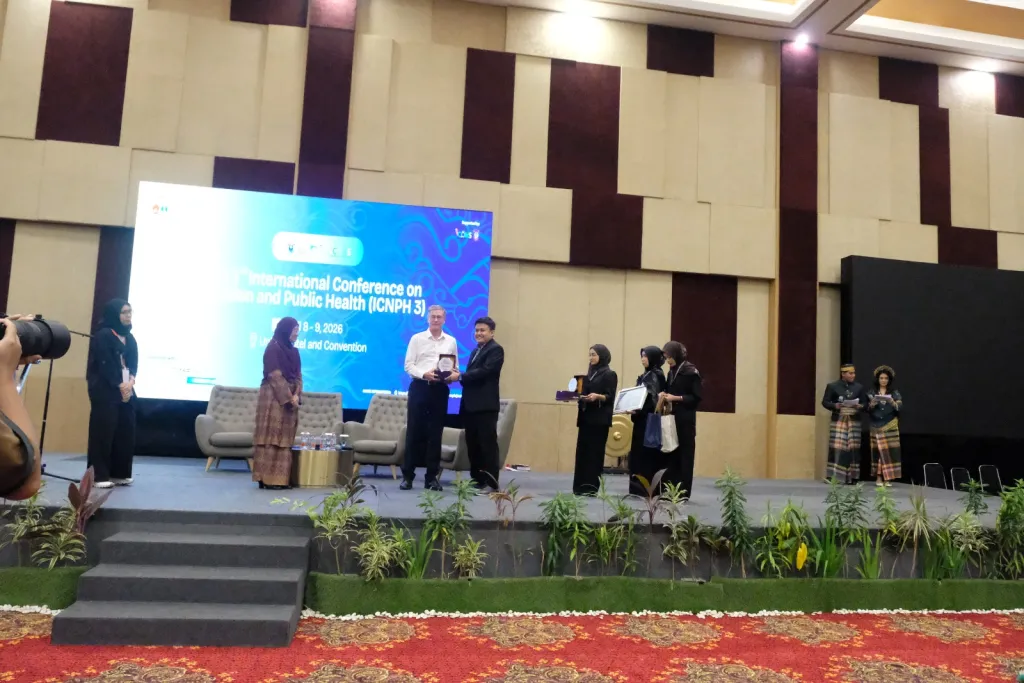
MAKASSAR – Nutritional issues remain among the most pressing public health challenges of the 21st century. As a center of academic excellence in Eastern Indonesia, the Faculty of Public Health (FKM) at Hasanuddin University (Unhas) has once again demonstrated its strategic role on the global stage. Through the 3rd International Conference on Nutrition and Public Health (ICNPH) 2026 held in Makassar, world-renowned nutrition experts gathered to formulate powerful strategies to address the global nutritional crisis.
This conference was more than a routine academic gathering; it was a manifestation of a collective commitment to address the “Triple Burden of Malnutrition”—a complex phenomenon encompassing undernutrition (stunting and wasting), overweight and obesity, and micronutrient deficiencies.
Understanding the Triple Burden of Malnutrition
The world today faces a challenge far more complex than simple hunger. Nutrition is no longer a linear issue of having enough to eat. On one hand, stunting rates remain a serious concern for the Indonesian government, currently hovering around 14 percent. On the other hand, the prevalence of obesity among both adults and children is rising at an alarming rate. Furthermore, “hidden hunger”—the deficiency of essential vitamins and minerals—continues to plague populations that may otherwise appear physically healthy.
During ICNPH 2026, experts emphasized that nutritional problems cannot be viewed in isolation. Interventions that focus solely on one aspect without considering the others risk exacerbating the situation. Therefore, a sustainable food systems approach and the integration of holistic public health policies are required.
[Image suggestion: A professional infographic displaying the intersection of undernutrition, obesity, and micronutrient deficiency]
Innovation in Nutrition and the Gut Microbiota
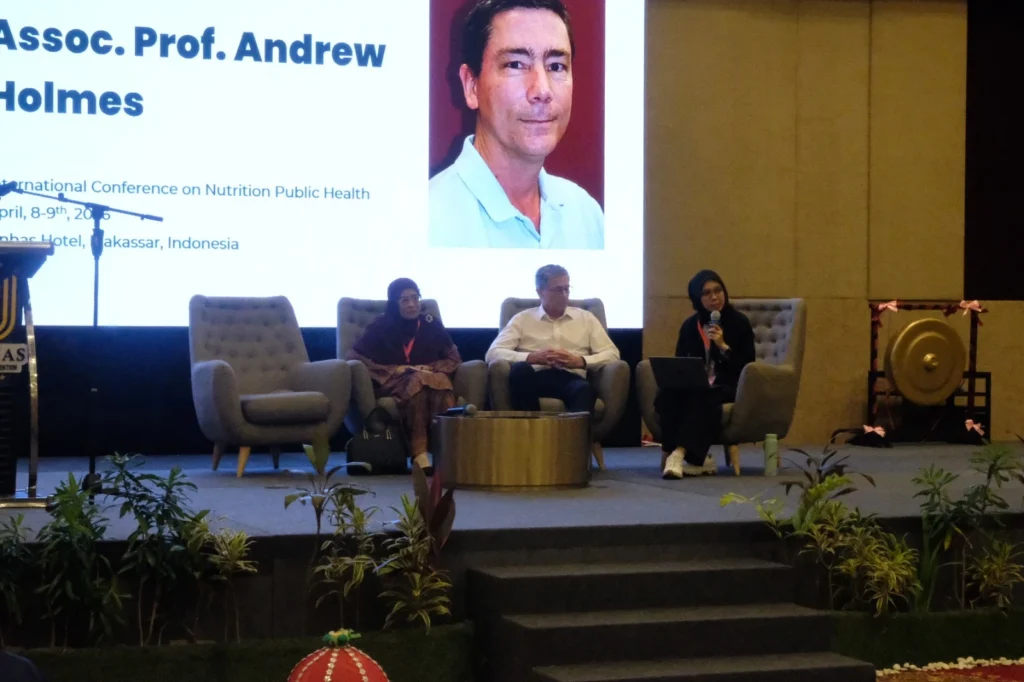
One of the primary highlights of the conference was the in-depth discussion regarding the Gut Microbiota. Keynote speaker Prof. Andrew Holmes emphasized that human health is deeply dependent on the ecosystem of microorganisms within the digestive system. Innovations in personalized nutrition are now looking toward the role of the microbiota to determine the specific dietary intake required for individuals to prevent degenerative diseases and improve nutritional status.
This represents a significant breakthrough as it demonstrates that nutritional solutions are no longer “one size fits all.” Great strategies involve a profound understanding of how the human body interacts with food at a molecular level.
Government Commitment: The Free Nutritious Meal Program
A hot topic of national debate discussed at the conference was the implementation of the Makan Bergizi Gratis (Free Nutritious Meal) program initiated by the Indonesian government. This program is viewed as a concrete step toward improving the quality of human resources in preparation for the “Golden Indonesia 2045” vision. Academics and health practitioners at ICNPH 2026 agreed that the program must be supported by accurate data and rigorous nutritional monitoring to ensure its goal of significantly reducing stunting is achieved.
The Vice-Rector of Hasanuddin University, Prof. Dr. Eng. Adi Maulana, ST., M.Phil., asserted that reducing stunting is a long-term investment. High-quality human resources can only emerge from a generation that receives adequate nutritional intake from the womb through their critical growth years.
Synergizing with Sustainable Development Goals (SDGs)
The strategies formulated during ICNPH 2026 are intrinsically linked to the United Nations’ Sustainable Development Goals (SDGs). Nutrition is at the very heart of achieving various global development targets.
First, these efforts contribute directly to SDGs Goal 2: Zero Hunger, which aims to end all forms of malnutrition by 2030. The nutritional strategies discussed aim to ensure universal access to safe, nutritious, and sufficient food year-round.
Secondly, this initiative supports SDGs Goal 3: Good Health and Well-being. By addressing the triple burden of malnutrition, we automatically reduce the risk of non-communicable diseases (NCDs) such as diabetes and hypertension triggered by obesity, while simultaneously boosting the immunity of children through micronutrient adequacy.
Finally, the international collaboration seen in this conference reflects SDGs Goal 17: Partnerships for the Goals. Cooperation between academics from various countries, governments, and the private sector is the key to creating systemic changes in global nutrition policy. Without global partnerships, local solutions will struggle to reach the scale necessary to overcome the global nutrition crisis.
The Role of FKM Unhas as a Catalyst for Change
As the host, the Faculty of Public Health at Unhas continues to strengthen its global network. This conference served as a platform for hundreds of scientific papers to be presented, providing evidence-based data that can be utilized by policymakers. The success of this event proves that Makassar has become a vital hub for international public health discourse.
It is hoped that the strategic insights and findings from ICNPH 2026 will not remain confined to seminar halls but will quickly transform into tangible action on the ground. Creating nutritional policies that are more effective, sustainable, and inclusive is a dream that must be realized for the sake of future generations.