
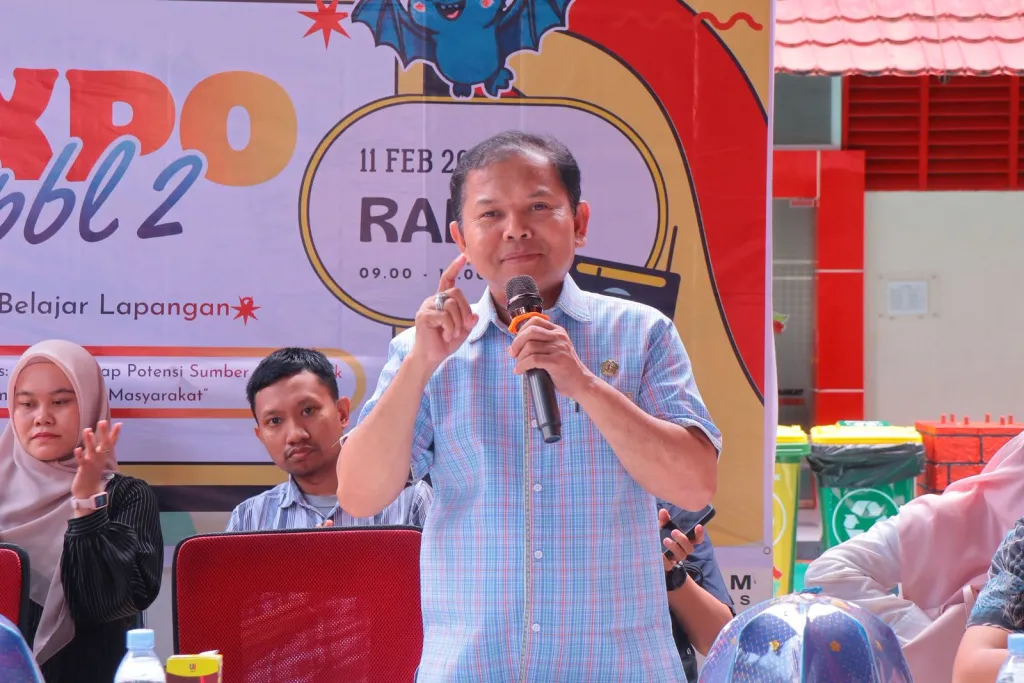
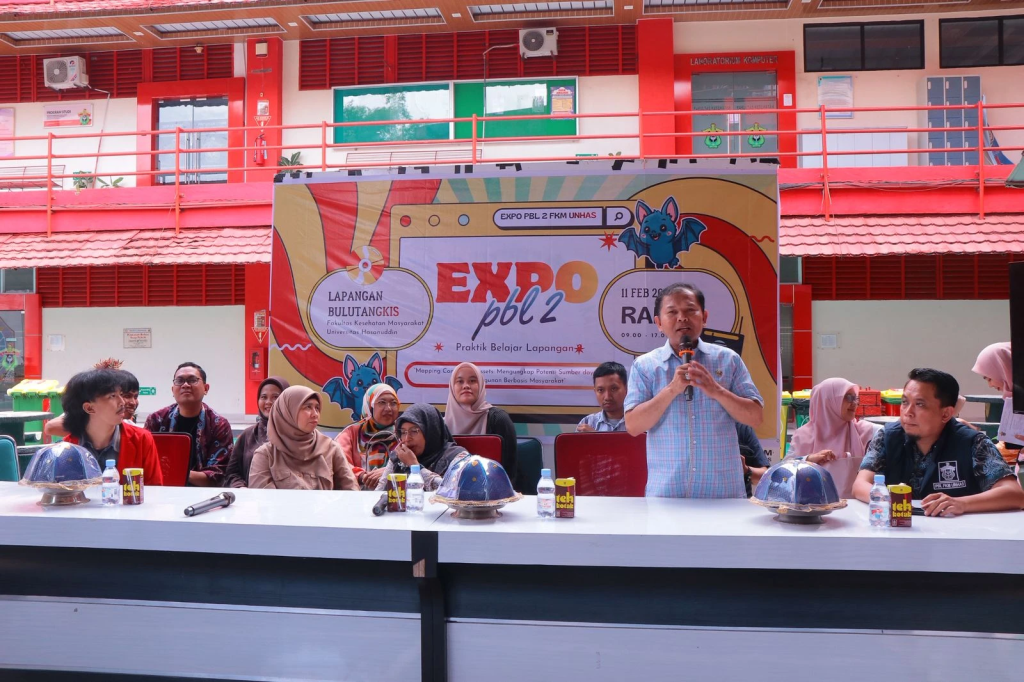
MAKASSAR – The Faculty of Public Health, Hasanuddin University (FKM Unhas), has once again demonstrated its unwavering commitment to producing health professionals who are not only academically excellent but also socially conscious. On Thursday (12/02/2026), the Dean of FKM Unhas officially inaugurated the PBL II Expo. Carrying the theme “Mapping Community Assets: Uncovering Resource Potential for Community-Based Development,” this event highlights the strategic importance of local assets as the foundation for sustainable health development.
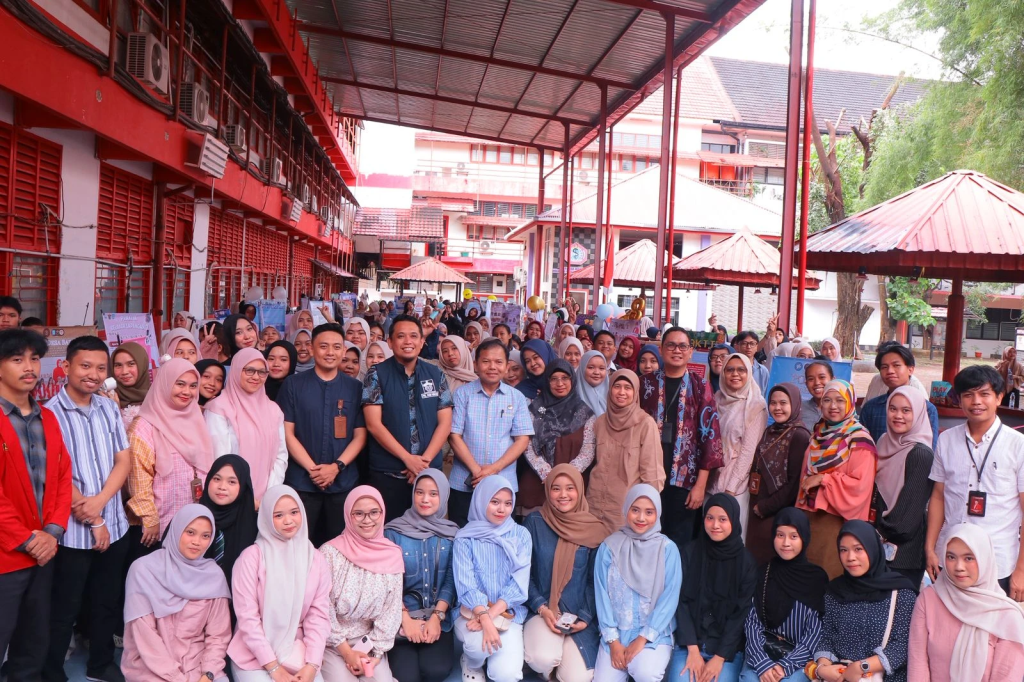
The expo, held at the Unhas campus, serves as the culmination of the Field Learning Experience (PBL) II program conducted by students across various regions, including Soppeng Regency. This exhibition is a platform for the 2023 cohort to showcase their asset mapping results and creative solutions for the public health challenges they encountered in the field.
Bridging Academic Theory and Field Reality
In the opening remarks, the Dean of FKM Unhas, Prof. Dr. Yusran Fachir (or the presiding official), expressed high appreciation for the students and faculty supervisors. He emphasized that PBL II is far more than a mere curricular requirement; it is a vital social laboratory.
“Public health cannot be built solely through top-down approaches. We must be capable of identifying what the community already possesses. By mapping local assets—whether they be human resources, influential community figures, local wisdom, or physical facilities—the health interventions we design will be more relevant and better embraced by the citizens,” he asserted.
The Asset-Based Community Development (ABCD) approach implemented by students this year marks a significant paradigm shift. It moves away from a traditional problem-based focus toward a strength-based perspective. Through this method, the community is no longer viewed as a passive object of charity but as an active subject with the modality to rise and achieve health independence.
Innovation at the PBL II Expo
The atmosphere of the PBL II Expo was vibrant, with interactive booths designed by students from various locations. They presented compelling data visualizations, ranging from disease distribution maps to the potential of family medicinal gardens (TOGA) and profiles of inspiring local health volunteers.
A primary focus of this year’s mapping was identifying local instruments to tackle environmental health issues and stunting. Students did not just present statistical data; they provided concrete program recommendations that can be adopted by village governments. The interactive dialogue between visitors, lecturers, and students at the booths created a dynamic exchange of knowledge.
Real Contribution to Sustainable Development Goals (SDGs)
The FKM Unhas PBL II Expo is intrinsically linked to the achievement of the Sustainable Development Goals (SDGs). Specifically, this initiative contributes directly to SDG 3: Good Health and Well-being. By mapping assets, students help ensure that all community members have better access to health information and services through the empowerment of local potential.
Furthermore, the program supports SDG 4: Quality Education, providing students with a holistic learning experience beyond the classroom. The active involvement of the community in the mapping process also reflects the spirit of SDG 17: Partnerships for the Goals. The synergy between academia, local government, and the community is the “secret sauce” for creating health independence at the grassroots level. By optimizing local assets, FKM Unhas is actively participating in building resilient, inclusive, and sustainable communities.
Future Outlook: Social Transformation through Science
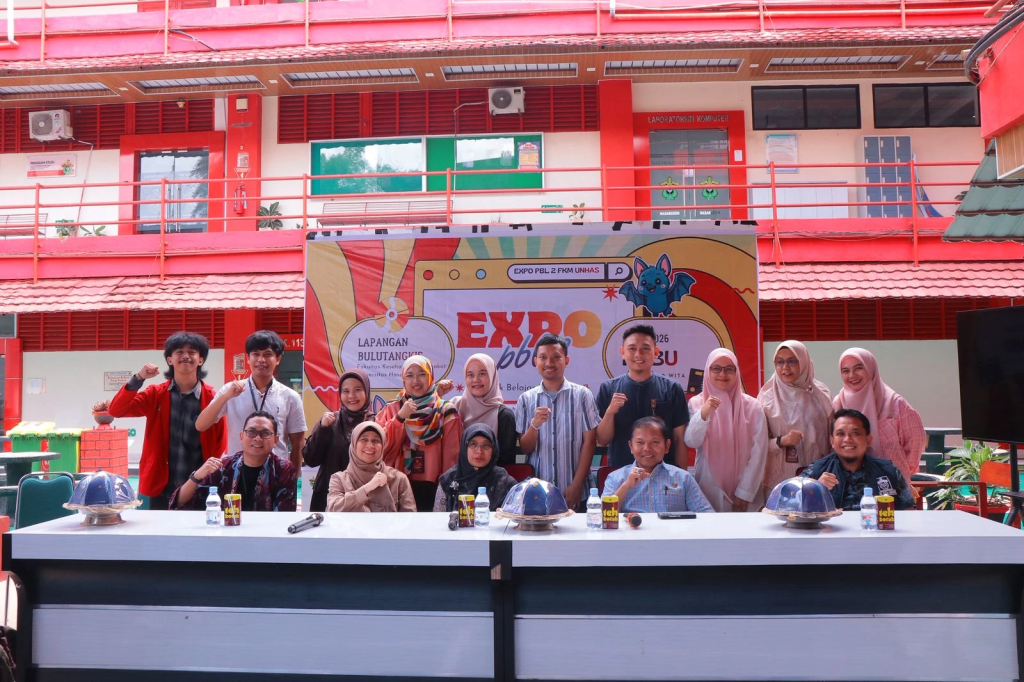
The success of the PBL II Expo is expected to be a catalyst for continuous innovation. The Dean reminded students that future global health challenges will only grow more complex. Therefore, the ability to map resources and forge collaborations is a mandatory competency for every public health graduate.
The 2026 PBL II is more than a presentation of work; it is a concrete manifestation of the “Tri Dharma” of Higher Education: education, applied research, and community service. By honoring science as an instrument for social transformation, FKM Unhas continues to step forward as a globally competitive yet locally grounded institution.
It is hoped that local governments, particularly in the PBL locations, will follow up on the students’ findings. The assets mapped during this program need to be managed and developed so they can evolve into real work programs that have a long-lasting impact on the welfare of the people in South Sulawesi.