
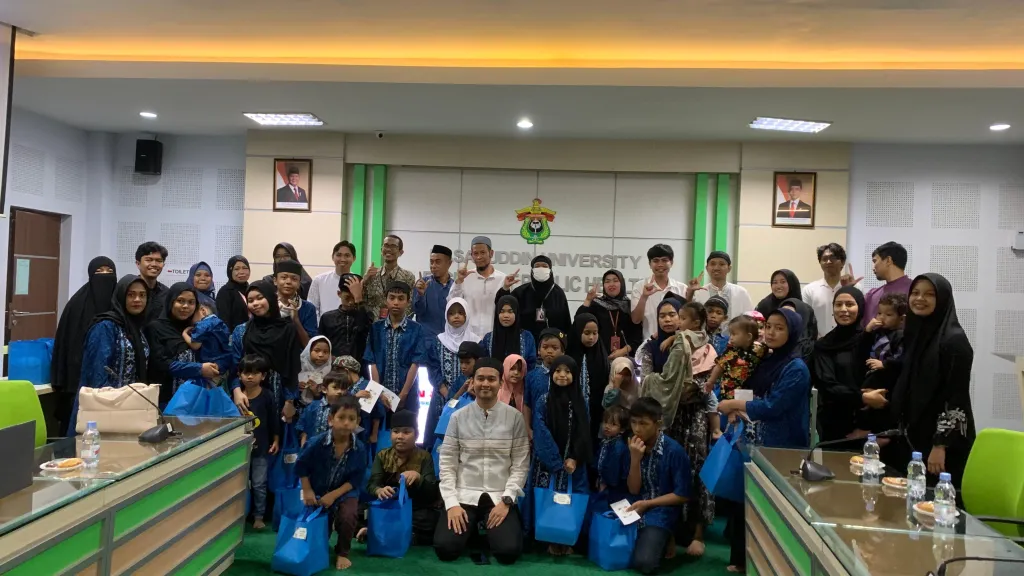
MAKASSAR – Embracing the holiness of Ramadan through meaningful action, the Department of Environmental Health at the Faculty of Public Health, Hasanuddin University (FKM Unhas), successfully organized its annual social event, “Amaliah Ramadan 4.” Held at the Prof. Dr. H. Nur Nasry Noor Hall, FKM Unhas Building, this event served as a vital momentum to strengthen communal ties and demonstrate the academic community’s deep concern for the underprivileged, particularly orphaned children.
The event, which took place in a solemn atmosphere on Thursday, March 12, 2026, carried the inspiring theme “Moving Forward Together.” More than just a yearly routine, this program is a manifestation of the humanitarian and spiritual values upheld by the Environmental Health Department family.
Synergy Between Academia and Alumni
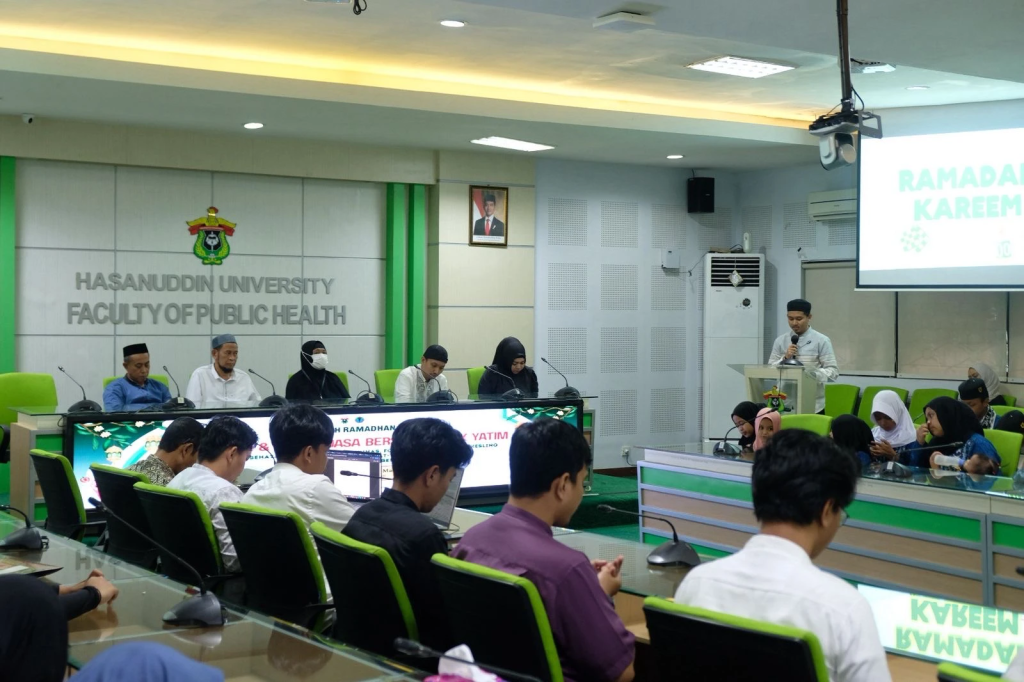
The Amaliah Ramadan 4 event was attended by key faculty leaders, including the Vice Dean for Academic Affairs, Dr. Wahiduddin, SKM, M.Kes., and the Vice Dean for Student Affairs, Prof. Anwar, SKM, M.Sc, Ph.D. Their presence underscored the institution’s full support for social impact initiatives.
In addition to the deanery, the Secretary of the Environmental Health Department, Muh. Fajaruddin Natsir, SKM, M.Kes, and representatives from the FKM Unhas Alumni Association (IKA), Dr. Arman, SKM, M.Kes, were also in attendance. The involvement of alumni reinforces the fact that the bonds within FKM Unhas remain strong, even as graduates move on to various professional sectors.
During the opening remarks, the department emphasized that the goal of this activity is to instill empathy among students and staff. By sharing happiness with orphans, it is hoped that a spirit of togetherness will flourish, bringing positive change to both the campus environment and the wider community.
Event Highlights: From Food Packages to Iftar Together
This year’s Amaliah Ramadan program featured several agendas directly addressing community needs. A primary focus was the distribution of essential food packages and “Eid Allowances” (THR) to those in need. This step was taken to help alleviate the economic burden on families during the month of Ramadan.
The highlight of the event was the donation ceremony for dozens of invited orphans. Joy was evident on their faces as they interacted with lecturers and students. The day concluded with a collective prayer and a communal “Iftar” (breaking of the fast), creating a warm, family-like atmosphere within the Unhas campus.
FKM Unhas’ Contribution to Sustainable Development Goals (SDGs)
The Amaliah Ramadan activities carried out by the Department of Environmental Health are closely aligned with several key points of the Sustainable Development Goals (SDGs).
First, the distribution of food and financial aid contributes to SDG 1 (No Poverty) and SDG 2 (Zero Hunger), where educational institutions play an active role in providing short-term social safety nets for vulnerable groups.
Second, as part of the Faculty of Public Health, this activity supports SDG 3 (Good Health and Well-being). Community well-being is measured not only by clinical aspects but also by psychosocial and spiritual health. Through healthy social interaction and moral support for orphans, FKM Unhas participates in building a more resilient and prosperous society.
Third, the synergy between the department, alumni, and the community is a concrete form of SDG 17 (Partnerships for the Goals). This cross-sector collaboration is key to ensuring that community service programs are sustainable and yield a broader impact.
The Importance of Social Responsibility in Higher Education
Hasanuddin University, through FKM, remains committed to being more than just a center of academic excellence; it strives to be a center of humanistic service. Muh. Fajaruddin Natsir, Secretary of the Department, emphasized that environmental health education cannot be separated from social awareness.
“A public health practitioner must possess high social sensitivity. Amaliah Ramadan is a laboratory for students to learn how to share and serve the community directly,” he stated.
Support from donors and the entire academic community was the driving force behind this event. The donations collected reflect the high spirit of generosity within Unhas. It is hoped that such activities will continue to grow in quality and reach in the future.
Empowering the Next Generation
Great hopes are held for the orphans who attended. Prayers were offered for them to grow into a virtuous and empowered generation, capable of becoming future leaders who bring goodness to the nation. The education and affection they receive today are expected to be the foundation for them to remain optimistic about the future.
As the Amaliah Ramadan 4 event concluded, the Department of Environmental Health at FKM Unhas hopes this message of kindness reaches all levels of society—reminding everyone that behind rigorous academic routines, there is a moral responsibility to look back and help those in need.