
MAKASSAR – In an effort to produce graduates who are not only academically excellent but also highly adaptive to the dynamics of the global healthcare industry, students from the Master of Hospital Administration (MARS) Study Program, Faculty of Public Health (FKM), Universitas Hasanuddin (Unhas), Cohort 11, organized a series of national and international hospital benchmarking activities. A total of 32 postgraduate students from the Luwu Timur Class participated in this deep-dive exploration, visiting a leading national university hospital in Indonesia and two highly reputable hospitals in Vietnam.
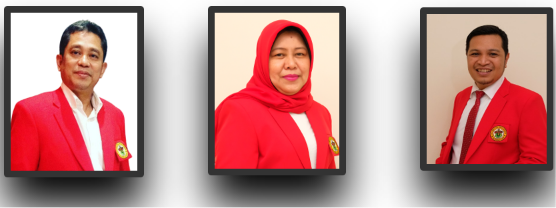
During this comparative field study, the student delegation was accompanied directly by three senior expert lecturers from FKM Unhas: Dr. Syahrir A. Pasinringi, MS (Head of the MARS Unhas Postgraduate Study Program), Dr. Fridawaty Rivai, SKM., M.Kes., and Dr. Irwandy, SKM., M.Sc.PH., M.Kes. This benchmarking series was specifically designed to bridge the management theories learned in the classroom with the operational realities of cutting-edge healthcare facilities.
Dissecting the Five Pillars of Management at Universitas Indonesia Hospital (RSUI)
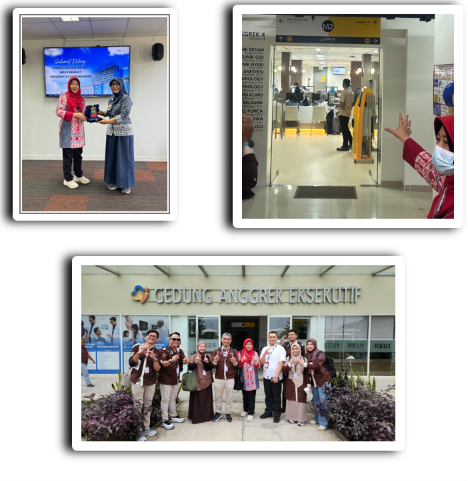
The benchmarking journey commenced on May 4, 2026, with a visit to Universitas Indonesia Hospital (RSUI) in Depok, West Java. The delegation from Universitas Hasanuddin received a warm welcome from the Director of Strategic Planning and Development along with the RSUI management team. This interactive session served as a strategic platform for students to delve into the institution’s profile, digital-based service innovations, and quality improvement strategies.
The core learning during this visit focused on five essential pillars of healthcare governance: marketing strategy, service quality assurance, human resource (HR) management, integrated healthcare services, and the efficiency of the Hospital Management Information System (SIMRS). The subsequent hospital tour provided a practical perspective on how leadership-level policies are translated into solid daily Standard Operating Procedures (SOPs) that drive both medical and non-medical staff.
A major highlight of the RSUI visit was the exclusive access granted to a select group of students to explore the premium services at the Anggrek Executive Building. In this area, students analyzed the comprehensive concept of patient experience built upon premium hospitality. To minimize queues and optimize comfort, RSUI implements a clear structural separation between the registration pathways for national health insurance (BPJS) patients and executive patients. Remarkably, the data migration system is designed to be highly seamless through integrated Electronic Medical Records (RME), eliminating bureaucratic and repetitive re-registration procedures for beringing patients.
From a strategic financial management perspective, this operational model introduced the students to the mechanism of cross-subsidization. The presence of premium services is not merely a form of commercialization, but rather a smart financial instrument. The revenue generated from this sector is reinvested into the hospital to fund state-of-the-art medical equipment, medical research, and quality enhancements for regular patient services. Mastering this modern financial and operational model is considered crucial for these future healthcare administrators as they prepare to advance the healthcare ecosystem, particularly in the Eastern Indonesia region.
High-Volume Patient and Emergency Management at Viet Duc University Hospital
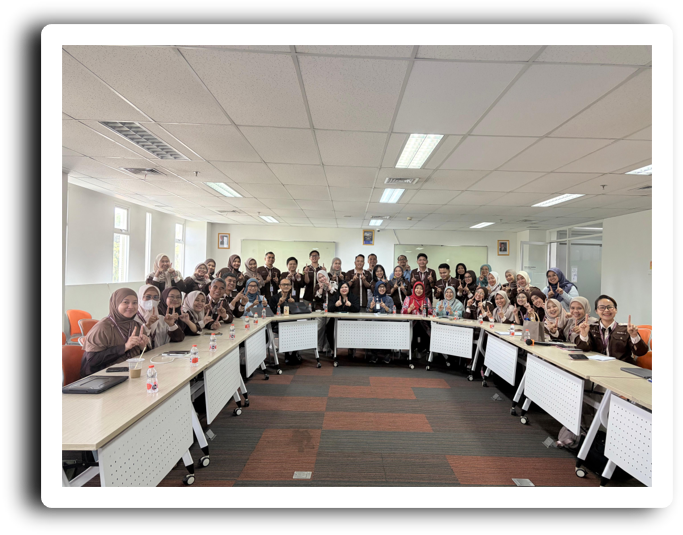
Broadening their horizons to the international arena, on May 7, 2026, the MARS FKM Unhas delegation continued their study to Hanoi, Vietnam. The first destination in the “Land of the Blue Dragon” was Viet Duc University Hospital, widely recognized as one of the largest, oldest, and busiest tertiary referral centers in Vietnam. The delegation was welcomed directly by the hospital’s board of directors and quality management team.
At Viet Duc University Hospital, the primary management challenge studied by the students was high-volume patient management. As a final-tier referral hospital, overcrowding in the Emergency Department (ED) is a daily operational reality. Students directly observed the efficiency of a rigorous triage system backed by the daily on-call readiness of 18 medical specialists.
To maintain an optimal patient flow, Viet Duc enforces a strict internal policy limiting the observation time in the ED to a maximum of 4 hours. Furthermore, before any patient can be transferred to an inpatient ward, explicit approval from a medical specialist is mandatory. This discipline regarding time and strict adherence to internal regulations proves that time efficiency is the absolute lifeline of successful emergency management. This valuable experience provided fresh administrative inspiration for the future hospital leaders from Unhas regarding the standardization of critical care workflows.
Telemedicine Innovations and Patient Satisfaction at Hanoi Medical University Hospital
On the same day, the international academic agenda continued at Hanoi Medical University Hospital. The visit to this healthcare facility offered a different yet complementary management perspective. Led by the Hospital Director and the Head of Quality, the discussions centered on strategic approaches to achieving exceptional patient satisfaction, as this facility is nationally ranked among the top three hospitals for patient satisfaction in Vietnam.
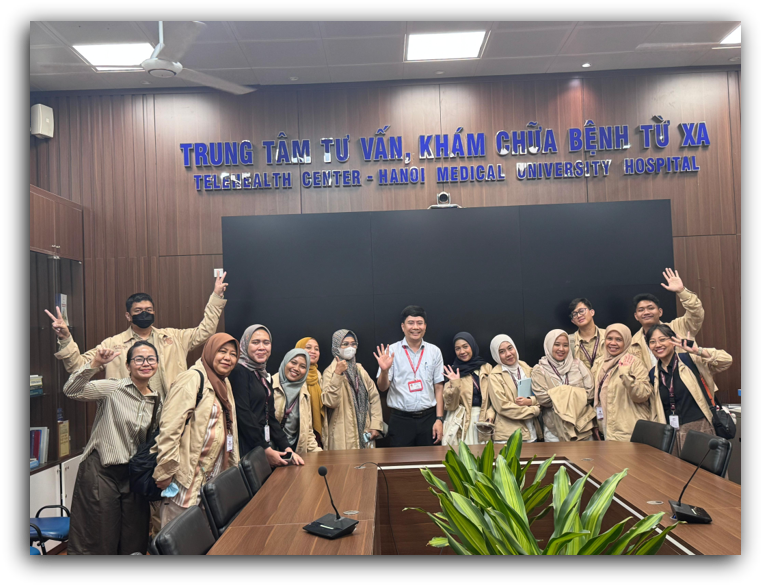
The MARS Unhas students dissected the secrets behind this achievement, which stems heavily from the seamless integration of a patient-centric culture with robust digital infrastructure. The clinical excellence of the medical staff is fully supported by a transparent IT system that simplifies healthcare access for patients.
For the field observations, the delegation was divided into three specialized groups. The first group studied the operational management within the flagship Cardiology and Cardiovascular Surgery unit. The second group examined the implementation of SIMRS directly at the real-time telemedicine center and looked into the fully digitalized pharmacy logistics management. Meanwhile, the third group observed the efficiency of laboratory sample and medical document distribution, which runs automatically utilizing a pneumatic tube system. This technological integration not only slashes patient waiting times but also drastically minimizes the risk of medical errors.
Direct Contribution to the Sustainable Development Goals (SDGs)
This benchmarking activity initiated by the MARS FKM Unhas Study Program strongly aligns with the United Nations’ global agenda, specifically supporting the achievement of the Sustainable Development Goals (SDGs). The primary focus of this management exploration contributes directly to SDG Target 3: Good Health and Well-being. By studying high-quality, safe, and responsive hospital governance, the students learn to build the core foundations necessary to realize Universal Health Coverage (UHC).
Furthermore, by analyzing advanced medical technology innovations and the digitalization of health information systems at RSUI and Hanoi Medical University Hospital, this program supports SDG Target 9: Industry, Innovation, and Infrastructure. Finally, the cross-border academic relationship forged between Universitas Hasanuddin and the healthcare institutions in Vietnam represents a tangible implementation of SDG Target 17: Partnerships for the Goals. This demonstrates that international academic collaboration successfully accelerates knowledge and technology transfer to elevate public healthcare quality globally.
In conclusion, the real-world comparisons across these top-tier hospitals are expected to significantly sharpen the strategic analysis, leadership capabilities, and social empathy of the MARS FKM Unhas Cohort 11 Luwu Timur Class students. This international exposure stands as a vital asset for them in designing, leading, and managing resilient modern hospitals capable of adapting to future technological disruptions.