
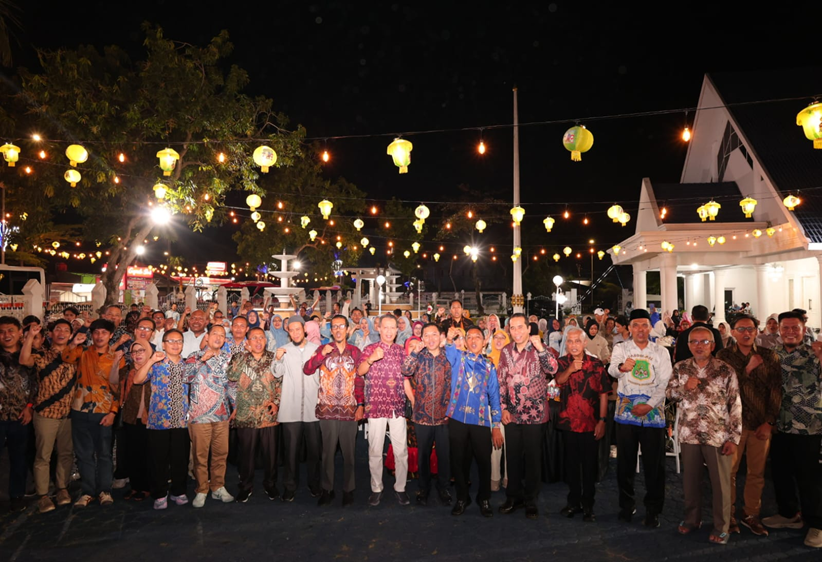
MAKASSAR – The Faculty of Public Health at Universitas Hasanuddin (FKM Unhas) successfully conducted the “2026 FKM Unhas Performance Evaluation and Strategic Performance Achievement” event in Sidenreng Rappang (Sidrap) Regency from April 17–19, 2026. This event served as a crucial momentum for the faculty to strengthen internal synergy and develop a strategic roadmap toward achieving an international reputation.
Collaborative Synergy with Local Government
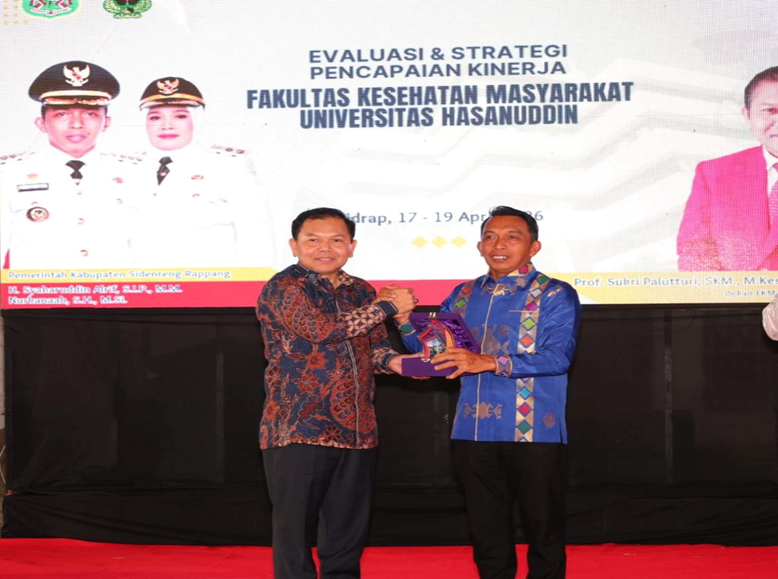
The opening ceremony was held at the official residence of the Regent of Sidrap on Friday evening, April 17, 2026. The event was attended by the Regent of Sidrap, H. Syaharuddin Alrif, S.IP., M.M., Ph.D. (Hon), and the Dean of FKM Unhas, Prof. Sukri Palutturi, S.KM., M.Kes., M.Sc.PH., Ph.D..
During his remarks, Dean Prof. Sukri expressed high appreciation for Sidrap’s development achievements, noting that the regency has successfully attained the top ranking in economic growth in South Sulawesi. Prof. Sukri specifically commended the Regent’s policy of providing strategic space for Public Health graduates (SKM) to serve in bureaucratic positions, such as the Head of the Health Department and as a District Head (Camat). He noted that these graduates are highly effective due to their strong social approach and community-based training.
Regent H. Syaharuddin Alrif emphasized the importance of strong collaboration between local government and universities to foster sustainable development, affirming that Unhas provides a significant positive impact on regions like Sidrap.
Performance Highlights and Achievements
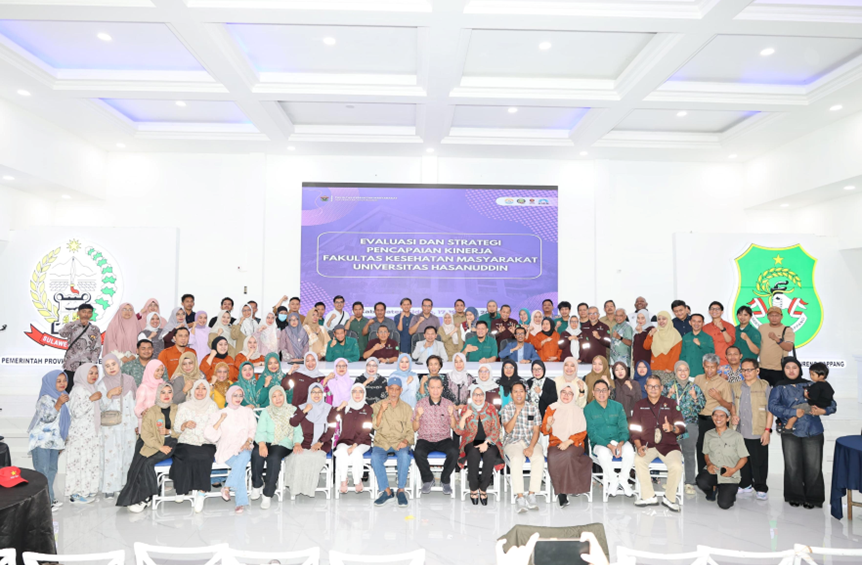
The second day of the event focused on evaluating faculty performance and formulating strategic targets. Key achievements highlighted during the sessions included:
- Research & Innovation: The Vice Dean for Partnership, Research, and Innovation received recognition for research publications that placed FKM Unhas faculty members within the top 2% of scientists globally based on international assessments.
- Quality Assurance: The faculty successfully maintained its “Unggul” (Superior) accreditation.
- Accountability: The faculty was recognized for successfully building an Integrity Zone (Zona Integritas) to ensure transparent and accountable governance.
These evaluations were systematically aligned with the achievement of Sustainable Development Goals (SDGs), specifically SDG 3 (Good Health and Well-being), SDG 4 (Quality Education), and SDG 17 (Partnerships for the Goals).
Future Strategic Outlook
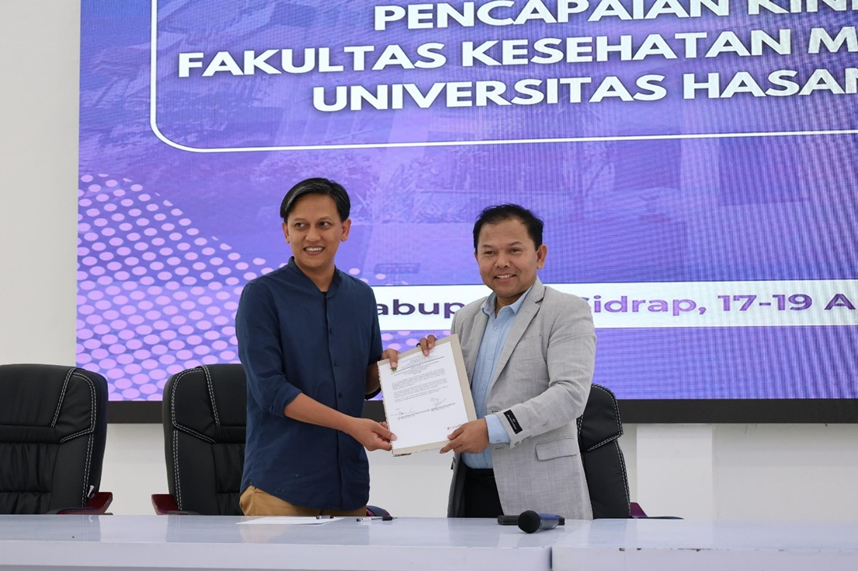
Closing the event, Dean Prof. Sukri officially ratified the strategic performance goals as a collective commitment. Key priorities for the future include:
- Human Resource Acceleration: Increasing the number of professors within the faculty.
- Infrastructure Revitalization: The development of a three-story “Gedung C” (Building C), which will house a modern nutrition laboratory, the Quality Assurance Group (GPM) office, and a fitness center for the academic community.
- Academic Excellence: Continued development of scientific journals and the acceleration of accreditation for the Dietitian Study Program.
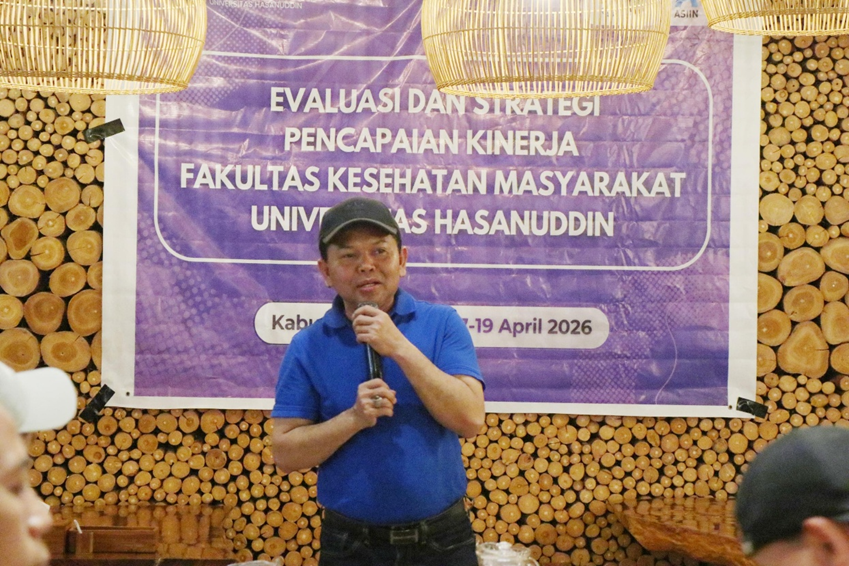
Prof. Sukri concluded the event with a reflective message, emphasizing that these prestigious achievements are the result of collective teamwork and “one breath” unity, rather than individual efforts. He expressed his pride in the dedication shown by all elements of the faculty, from professors and lecturers to administrative staff and security personnel.