
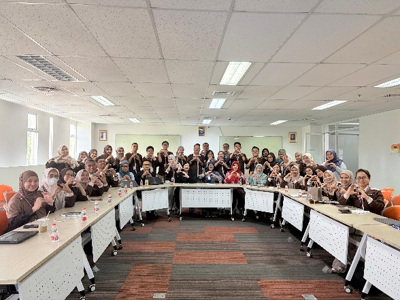
MAKASSAR – In a continuous effort to cultivate highly adaptive, innovative, and globally competitive graduates, the Master of Hospital Administration (MARS) Study Program, Faculty of Public Health, Hasanuddin University (FKM Unhas) 11th Cohort, successfully completed a series of national and international hospital benchmarking initiatives in May 2026. This strategic program was designed as a golden gateway for students to compare, analyze, and assimilate modern healthcare governance models across domestic and international landscapes.
The extensive study tour engaged 32 selected postgraduate students accompanied by 3 expert faculty members from FKM Unhas. Throughout the program, participants comprehensively examined five main pillars of contemporary hospital management: hospital marketing strategies, healthcare quality assurance, human resource (HR) management, integrated healthcare delivery systems, and the implementation of forward-looking Hospital Management Information Systems (SIMRS).
Quality-Driven Care Transformation: A Deep Dive at Universitas Indonesia Hospital (RSUI)
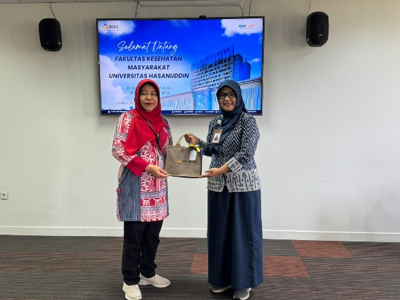
The academic journey of the MARS FKM Unhas delegation commenced on May 4, 2026, with a high-profile visit to the Universitas Indonesia Hospital (RSUI) in Depok, West Java. Recognized as a pioneer in high-tier university hospital design featuring earthquake-resistant infrastructure and interprofessional integration, RSUI served as an ideal locus for observing how healthcare institutions merge clinical education functions with advanced operational efficiency.
The Unhas delegation was warmly received by the Director of Strategic Planning and Development along with the senior executive board of RSUI. During an interactive discussion session held in the main conference room, RSUI management presented an in-depth overview of their institutional profile, operational governance, and digital transformation roadmap centered entirely around patient safety. Students were granted a unique opportunity to evaluate how RSUI’s integrated SIMRS processes electronic medical records to facilitate swift and precise clinical decision-making.
Beyond theoretical discussions, the students were split into three specialized tracking groups for an extensive hospital tour across various care touchpoints. Notably, seven student representatives were granted exclusive access to observe RSUI’s premium care units. This dedicated tracking aimed to provide a profound understanding of premium patient experience management, advanced hospital marketing strategies, and post-discharge patient retention protocols.
Mastering Trauma Care and Emergency Response at Viet Duc University Hospital, Vietnam
Furthering its commitment to absolute internationalization, the MARS FKM Unhas delegation traveled to Hanoi, Vietnam, on May 7, 2026, to conduct a comprehensive benchmarking study at Viet Duc University Hospital. As one of the largest surgical and trauma referral hubs in Vietnam, managing an extraordinarily high volume of daily emergency admissions, the institution presented a highly complex tertiary management model for the future hospital administrators to analyze.
The executive board, clinical service directors, and the quality management committee of Viet Duc University Hospital directly welcomed the Unhas delegation. The learning focus here leaned heavily toward emergency care management and clinical workflow efficiency. Student representatives assigned to the hospital tour meticulously evaluated the operational performance of the Emergency Department (ED). They analyzed how the hospital effectively deploys 18 specialized physicians daily within the emergency unit to guarantee immediate and precise life-saving responses.
Furthermore, the hospital’s strict protocol limiting patient observation time in the ED to a maximum of 4 hours before deciding on admission, surgery, or discharge provided a crucial case study on mitigating emergency department overcrowding. Students also examined the rigorous clinical coordination required for inpatient transfers; patients cannot be moved to inpatient wards without formal clearance and written approval from the respective attending specialist. This protocol is strictly enforced to ensure clinical indications are precise and quality control is fully integrated.
Telemedicine Innovations and Automated Pharmacy Ecosystems at Hanoi Medical University Hospital
On the same day, May 7, 2026, the FKM Unhas delegation also visited Hanoi Medical University Hospital (HMUH). This prominent teaching hospital is highly regarded across Southeast Asia for consistently achieving the highest patient satisfaction indices, ranking among the top three in Vietnam, driven primarily by massive investments in digital health ecosystems and medical technology innovations.
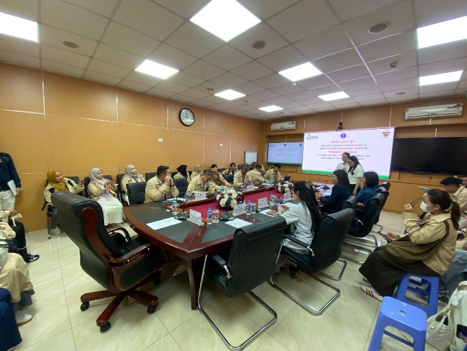
The delegation was received by the Chief Executive Officer (CEO) of HMUH and the Head of Quality Management. During the knowledge-sharing session, it was revealed that the cornerstone of HMUH’s exceptional patient satisfaction is their unyielding commitment to smart technologies that drastically reduce patient wait times. To dissect this digital ecosystem, the students were divided into three focused observation groups.
The first group observed the signature Cardiology and Cardiovascular Surgery unit to analyze rapid cardiac care pathways. The second group explored the SIMRS department which oversees an integrated telemedicine center; an advanced system allowing medical specialists to monitor the vital signs of remote patients in real-time. In this unit, students also observed a fully automated pharmacy management ecosystem, where medication stock levels across all dispensaries are monitored automatically and accurately via smart information software.
Concurrently, the third group investigated the automated clinical laboratory, which utilizes an advanced pneumatic tube system. This pressure-driven medical logistics network safely transfers blood samples, clinical documents, and urgent medications between specialized departments within seconds. Implementing this technology significantly minimizes human error risks and accelerates clinical diagnosis for inpatient and emergency care.
A Tangible Contribution to the Sustainable Development Goals (SDGs)
This international hospital benchmarking initiative spearheaded by the MARS Study Program of FKM Unhas plays a pivotal role in driving the achievement of the United Nations Sustainable Development Goals (SDGs), particularly SDG 3: Good Health and Well-being and SDG 4: Quality Education. Through knowledge transfer and the direct adoption of global best practices from world-class medical institutions, FKM Unhas directly impacts the quality enhancement of domestic healthcare governance. Graduates equipped with an advanced understanding of emergency department efficiency, digitalized SIMRS, and patient safety management are expected to formulate progressive hospital operational policies in Indonesia that are more inclusive, responsive, and of premium quality—ensuring excellent healthcare access for all communities.
Strengthening International Institutional Partnerships and Future Outlook for Unhas MARS Alumni
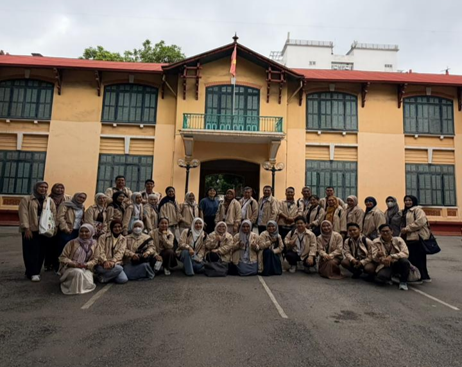
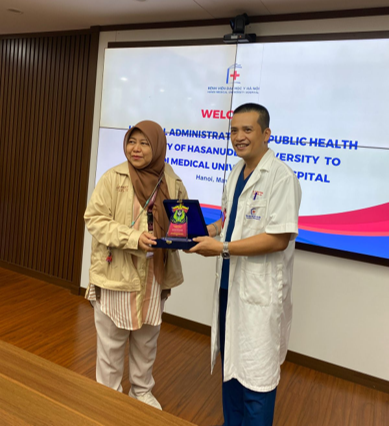
As a concrete manifestation of strategic partnership, at the conclusion of each benchmarking session, FKM Hasanuddin University, represented by the accompanying faculty members, presented corporate plaques and tokens of appreciation to the executive management of RSUI, Viet Duc University Hospital, and Hanoi Medical University Hospital. This gesture symbolized deep institutional gratitude and laid a solid foundation for future collaborative research, faculty exchanges, and international residency placements for Unhas postgraduate students.
Through this immersive experiential learning across three prestigious international healthcare facilities, the 11th Cohort of MARS FKM Unhas students are expected to move beyond classroom theories and develop sharp analytical acumen to solve complex national hospital operational challenges. A holistic grasp of technology integration, quality management, and structural efficiency is paramount to ensuring that FKM Unhas alumni step up as progressive agents of change, elevating Indonesia’s healthcare system onto the global stage.