
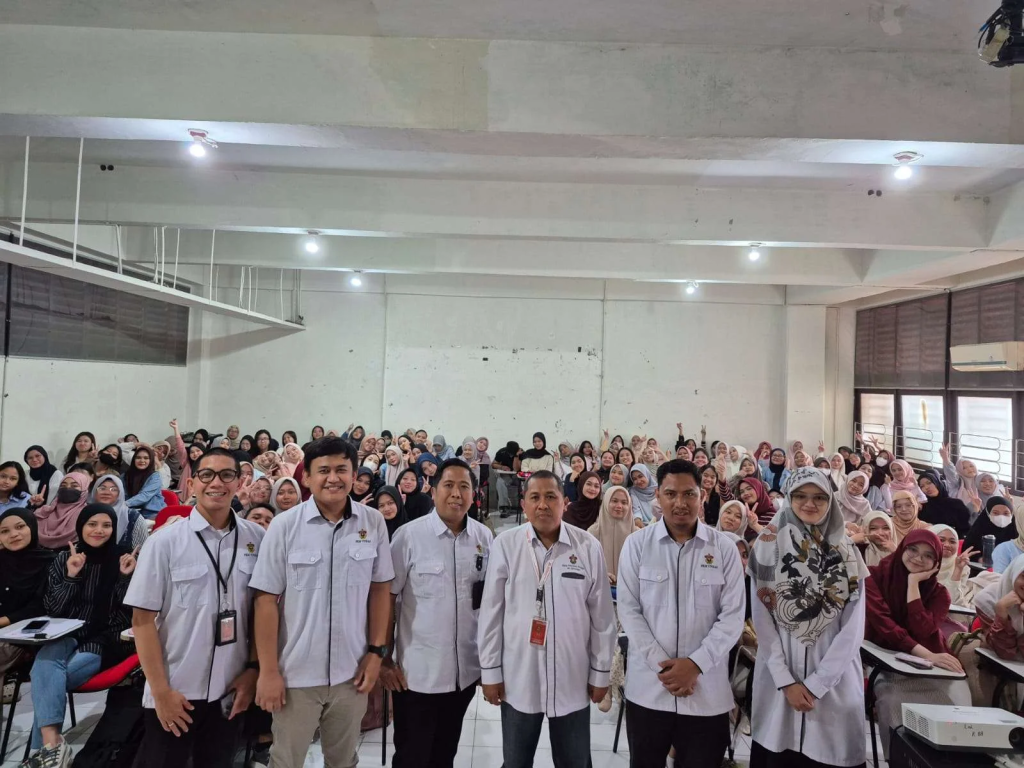
MAKASSAR – The Undergraduate Program in Nutrition Science, Faculty of Public Health, Hasanuddin University (FKM Unhas), has once again demonstrated its commitment to producing competent professional nutritionists through the implementation of Evidence-Based Learning (EBL). As a primary step toward field implementation, the Nutrition Science Study Program officially opened the briefing session for EBL Phase I and EBL Phase III. This activity is designed to equip students with a solid theoretical and practical foundation before they engage directly with the community.
The Importance of Evidence-Based Learning in Nutrition
In the opening remarks, the Head of the Nutrition Science Study Program emphasized that the Evidence-Based Learning method is a crucial instrument in the modern health curriculum. Students are not only required to understand theories in the classroom but must also be able to apply scientific data and facts to solve complex, real-world nutritional problems.
This briefing aims to provide a deep understanding of research instruments, data collection techniques, and the ethics of communicating with the community. With thorough preparation, students are expected to accurately identify nutritional issues and provide targeted intervention recommendations.
Distinct Focus: EBL I and EBL III
The current EBL activities involve two cohorts of students with different yet continuous focus areas:
- EBL I (Initial Phase): Students at this stage focus on environmental orientation and the collection of basic public health data. They are taught how to perform initial mapping of nutritional status in target areas, conduct environmental observations, and build rapport with local residents.
- EBL III (Advanced Phase): At this higher level, students are expected to perform more in-depth data analysis. The primary focus is designing innovative nutritional intervention programs based on available local assets. EBL III students act as agents of change, providing concrete solutions based on findings from previous stages.
The Briefing Process: From Theory to Simulation
During the briefing period, students received intensive materials from expert lecturers within FKM Unhas. The topics covered included the use of precision anthropometric tools, filling out Food Frequency Questionnaires (FFQ), and utilizing the latest data analysis software.
Beyond lectures, the briefing featured field simulation sessions. Students practiced persuasive and educational interview techniques, acknowledging that field challenges often involve communication barriers and local cultural differences.
Academic Collaboration and Synergy
The implementation of EBL I and III also serves as a platform for collaboration between the university and various health partners, such as local Community Health Centers (Puskesmas) and District Health Offices. This partnership is vital to ensure that the data collected by students aligns with local government priority programs, such as stunting reduction and the prevention of non-communicable diseases.
Support from the faculty leadership is also evident in the direct involvement of field supervisors who will monitor student progress periodically. This ensures that every student activity in the field remains within academic corridors and strict professional ethics.
Tangible Contribution to the SDGs
The Evidence-Based Learning (EBL) program conducted by the Nutrition Science Study Program at FKM Unhas is closely linked to the achievement of the Sustainable Development Goals (SDGs), particularly Goal 2: Zero Hunger and Goal 3: Good Health and Well-being. By early identification of nutritional issues and promoting balanced diet education, students contribute directly to national efforts in reducing malnutrition and stunting rates.
Furthermore, this activity supports Goal 4: Quality Education, where students gain access to inclusive, practice-based education, and Goal 17: Partnerships for the Goals through cross-sector collaboration between academia, health workers, and the community. Through this SDG integration, FKM Unhas ensures that its academic activities provide a long-term impact on global community welfare.
Expectations for the Students’ Future
The Dean of FKM Unhas consistently encourages Nutrition students not to be mere observers but to become active participants in improving the nation’s nutritional status. Through EBL, students are trained to have sharp analytical skills, professional integrity, and high social empathy.
“We hope that through this EBL I and III briefing, students are ready to face the dynamics in the field. They are health ambassadors representing the name of Hasanuddin University; therefore, professionalism and ethics must always be upheld,” stated the faculty leadership in a closing message.
Conclusion
The EBL I and III briefing is a clear testament to the commitment of the Nutrition Science Study Program at FKM Unhas to realizing its vision as a center of excellence for nutrition education in Eastern Indonesia. By combining theoretical strength with field evidence, FKM Unhas graduates are expected to be ready to meet the dynamic health challenges of the future.