
MAKASSAR – Hasanuddin University (Unhas) continues to strengthen its position as a higher education institution that upholds the values of transparency and accountability. In the midst of this collective effort, the Faculty of Public Health (FKM) Unhas has emerged as a frontrunner and a source of inspiration in the development of the Integrity Zone (IZ). As one of the faculties that successfully passed internal evaluations and represented the university at the national level, FKM Unhas demonstrates that integrity is not just a slogan, but an ingrained work culture.
This strategic step originated from the vision of the Rector of Hasanuddin University, Prof. Dr. Jamaluddin Jompa, M.Sc, who encouraged all faculty units and service centers to transform into a Corruption-Free Area (Wilayah Bebas dari Korupsi – WBK). In this journey, FKM Unhas was selected alongside the Faculty of Medicine and the Faculty of Forestry as pioneers meeting the strict standards of the Ministry of Administrative and Bureaucratic Reform (PAN-RB). This success is clear evidence that professional faculty management can create a clean and serving academic environment.
Building Foundations Through Six Areas of Change
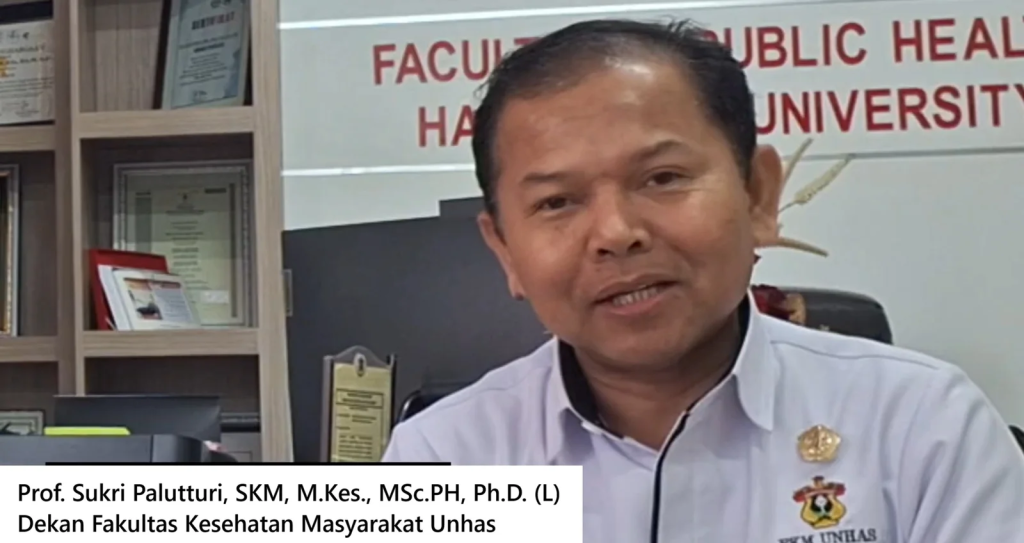
The Dean of FKM Unhas, Prof. Sukri Palutturi, S.K.M, Ph.D., explained that this achievement is based on the consistent implementation of six areas of change. These six pillars serve as a compass for the entire academic community in carrying out their daily duties.
1. Change Management: Mental Revolution and Digitalization
Change begins with the mindset. Change management at FKM Unhas emphasizes leadership commitment, where leaders lead by example. One of the major breakthroughs is the digitalization of services. By minimizing physical contact through online systems, the potential for gratification or administrative deviations is significantly reduced. Furthermore, guest comfort is prioritized with a representative Faculty Service Unit, creating the impression that public service is a top priority.
2. Inclusive Governance and Procedure Alignment
FKM Unhas has audited all bureaucratic flows to be more effective and efficient. A highly commendable aspect is the commitment to inclusivity. The faculty has become one of the most disability-friendly environments within Unhas. From providing standard-compliant ramps to involving volunteer assistants for students with disabilities, FKM proves that good governance must touch all layers of society without exception.
3. Human Resource Management System
The quality of an institution is determined by its people. FKM Unhas is very serious about capacity building for its staff. For lecturers with a Master’s degree, there is intensive mentoring to encourage them to pursue Doctoral studies immediately. Not only lecturers, but also educational staff and cleaning services are trained with Service Excellence standards. Training held in Malino serves as proof that every personnel—from top management to field staff—is the face of FKM Unhas and must act in a friendly, professional, and informative manner.
4. Technology-Based Supervision
Transparency is supported by a strict supervision system. The use of 24-hour CCTV is not only for physical security but also as a tool to monitor discipline and environmental culture, such as the implementation of the No-Smoking Area (KTR). The principle is preventive; this system exists to build collective awareness so that every individual feels monitored by their own commitment.
5. Strengthening Performance Accountability
Every cent of the budget and every policy must be accountable. At FKM Unhas, accountability is seen as a public trust. All leaders and staff work based on measurable performance targets, ensuring that the faculty’s vision is aligned with the university’s achievements.
6. Improving Public Service Quality
Public service at FKM is not only for students and lecturers but for all stakeholders. Civilized and professional interaction has become a mandatory Standard Operating Procedure (SOP). With an open feedback system, the faculty continuously evaluates every input from service users.
Relevance to Sustainable Development Goals (SDGs)
FKM Unhas’ efforts in building an Integrity Zone are closely linked to the global Sustainable Development Goals (SDGs) agenda, specifically SDG 16: Peace, Justice, and Strong Institutions. By preventing corruption, increasing transparency, and enhancing bureaucratic efficiency, FKM Unhas contributes to building effective, accountable, and transparent institutions at all levels.
Furthermore, FKM’s focus on disability-friendly services also supports SDG 10: Reduced Inequalities, by ensuring equal access to education and public services for everyone. As a health faculty, the principle of “Prevention is better than cure” applied in organizational governance is a manifestation of public health philosophy that supports SDG 3: Good Health and Well-being. A corruption-free institution ensures that health education resources are distributed more accurately, ultimately improving the quality of graduates and the overall health status of the community.
Prevention as an Organizational Philosophy
Prof. Sukri Palutturi emphasized that public health philosophy greatly influences how this faculty is managed. “As public health professionals, we believe that prevention is much better than cure. We apply this to our management system. We build supervision systems and an integrity culture to prevent violations, rather than simply punishing after an error occurs,” he stated.
This step by FKM Unhas is expected to be a catalyst for other faculties at Hasanuddin University. This transformation proves that with strong will, a university can become an institution that is not only academically superior but also a role model in morality and public ethics.
Moving forward, FKM Unhas is committed to maintaining this status and continuing to innovate in providing the best service for the nation. Because in the end, integrity is the primary foundation for producing the next generation of character-driven leaders.