
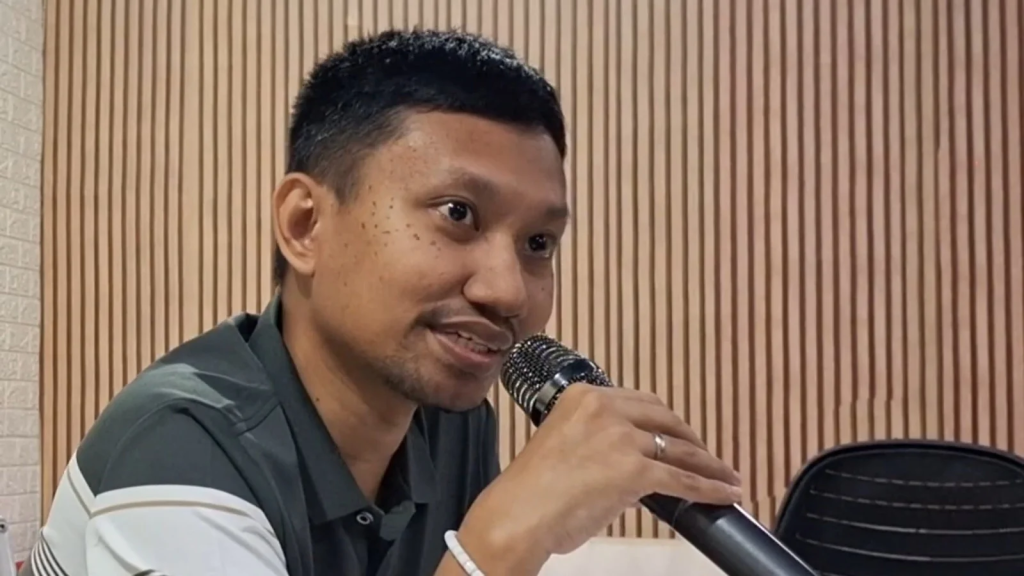
MAKASSAR – Public health issues in urban areas are often viewed solely through a medical or clinical lens. However, for Basir, S.K.M., M.Sc., a young academic from the Faculty of Public Health (FKM) at Hasanuddin University (Unhas), the reality on the ground is far more complex. In an in-depth discussion titled “Ngopi Bareng” held in mid-February 2026, Basir explained why the Tallo district in Makassar requires special attention through an integrated urban health approach.
Immersing in the Laboratory of Life: From Classroom to the Field
Since joining as a faculty member at FKM Unhas in 2021, Basir has taken a path seldom chosen by many academics: diving directly into the most vulnerable points of society. For him, environmental health cannot be studied solely through textbooks in comfortable classrooms. The field is the true laboratory, where policies are tested against the harsh realities faced by citizens every day.
Basir’s experience is not instantaneous. As the coordinator of the Field Study Practice (PBL) for FKM Unhas students, he has surveyed various regions in South Sulawesi, from Pangkep to Takalar. However, his attention always returns to Makassar, specifically the Tallo area. For Basir, Tallo is more than just an administrative location; it is a mirror reflecting the paradoxes of urban development in major Indonesian cities.
Tallo: A Portrait of Environmental Health Paradoxes in Makassar
The Tallo area, particularly around RW 5 located behind SMK 5 Makassar, has been identified as one of the most critical spots. The primary issue seems simple yet has systemic impacts: the lack of adequate waste management facilities. Without evenly distributed Temporary Disposal Sites (TPS), residents are forced to dispose of domestic waste in inappropriate spaces, which in turn contaminates the soil and water sources.
Basir explained that the problems in Tallo cannot be understood sectorally. Issues of waste and poor sanitation are intertwined with other social problems such as high crime rates, drug abuse, and social conflicts. All of these form what he calls an “ecosystem of vulnerability.” When the physical environment is degraded, the social resilience of the community also becomes fragile.
Local Leadership and Hope Amidst Limitations
Despite the massive challenges, Basir noted sparks of light in community-based environmental management. In several RT and RW levels, self-help waste management systems initiated by senior FKM Unhas lecturers still survive.
However, the sustainability of these programs often hits classic urban hurdles: lack of clarity regarding incentives for waste collectors, limited operational support from the city government, and unstable community contribution systems. Conversely, areas that remain relatively stable are usually supported by active and participatory local leadership. This demonstrates that health interventions require not only funding but also leadership integrity at the grassroots level.
Integration with Sustainable Development Goals (SDGs)
The analysis presented by Basir aligns closely with the global agenda of the Sustainable Development Goals (SDGs). Specifically, it addresses SDG 3 (Good Health and Well-being) and SDG 11 (Sustainable Cities and Communities). The efforts of this FKM Unhas academic emphasize that to achieve a healthy society, a city must be able to provide proper sanitation and safe waste management.
The conditions in Tallo serve as a reminder that the goal of SDG 11—making cities inclusive, safe, and sustainable—is still far from the reach of people in urban slum areas. The urban health handling proposed by FKM Unhas also touches upon SDG 6 (Clean Water and Sanitation), as the failure to manage waste in coastal areas like Tallo directly impacts water quality and marine ecosystems (SDG 14). Through the involvement of academics who listen and are present in the field, FKM Unhas strives to bridge the gap between government policy and the real needs of the community, upholding the principle of “Leaving No One Behind.”
Basic Infrastructure: The Root of the Problem
In cross-disciplinary discussions with legal and public policy experts, Basir reiterated that weak basic infrastructure remains the primary stumbling block. The distribution of environmental facilities to the lowest levels is often unequal. This is exacerbated by issues at the Final Disposal Site (TPA), which is already over capacity.
He also highlighted the potential for new waste generated by ongoing national programs. As an academic, he chooses to remain critical and cautious. “We continue to trace data and discuss with environmental and maritime experts to see the long-term impact on residents,” he stated.
Conclusion: Urban Health is Social Justice
Closing his reflection, Basir emphasized that talking about urban health means talking about human dignity. A polluted environment is not just a technical waste problem; it is evidence of injustice in development. For FKM Unhas, dedication to Tallo is a form of standing with those whose voices are often unheard in cool government meeting rooms.
Tallo may be full of problems, but it is precisely there that the most meaningful environmental health interventions can begin. By continuing to be present, listen, and persist in the field, young academics like Basir prove that the role of a university is not just to produce graduates, but to be at the forefront of improving the nation’s quality of life.